
Building a resilient, highly productive livestock sector in Southern Africa requires a careful balance between advanced science and local adaptability. While the technical expertise for genetic acceleration exists globally, Zimbabwe currently lacks dedicated facilities and programs designed to scale these services for both commercial and communal benefit.
To bridge this gap, a parallel project is envisioned to continuously supply advanced genetic material to dairy programs, while simultaneously empowering local communities and the wider region. The key to unlocking this potential lies in the establishment of localized Embryo Transfer (ET) capabilities.
Identifying Our Best Asset: Superior Female Stock
The process begins by identifying female stock that demonstrate superior productive capabilities compared to their peers. Using a variety of performance variables—including milk production, calving indexes, and ease of calving—the top cows are selected to share their elite genetic potential and entered into the program.
By super-ovulating these chosen cows, extracting the embryos or eggs, and transferring them to recipient animals, the genetics of our highest-performing cattle can be rapidly multiplied.
The Mechanics of Genetic Acceleration: MOET vs. IVF
To achieve this rapid multiplication, the program utilizes two primary, commercially proven techniques:
1. Multiple Ovulation and Embryo Transfer (MOET)
This traditional method involves stimulating a superior donor cow’s ovaries to release multiple eggs. She is then inseminated using high-quality semen. Once the fertilized eggs (embryos) have grown for a short period, the donor cow is safely flushed. The collected embryos are then either immediately transferred into synchronized recipient cows or frozen and stored for future use.
2. In-Vitro Fertilization (IVF) & ICSI
More modern techniques rely on IVF and Intracytoplasmic Sperm Injection (ICSI). In this process, unfertilized eggs are harvested from the donor cow before insemination. The fertilization is performed entirely under precise laboratory conditions.
The distinct advantage of IVF/ICSI is that individual eggs from a single flush can be fertilized using sperm from different elite sires. This extrapolates the genetic potential of a single cow at an exponentially faster rate.
The Critical Need for a Zimbabwean Program
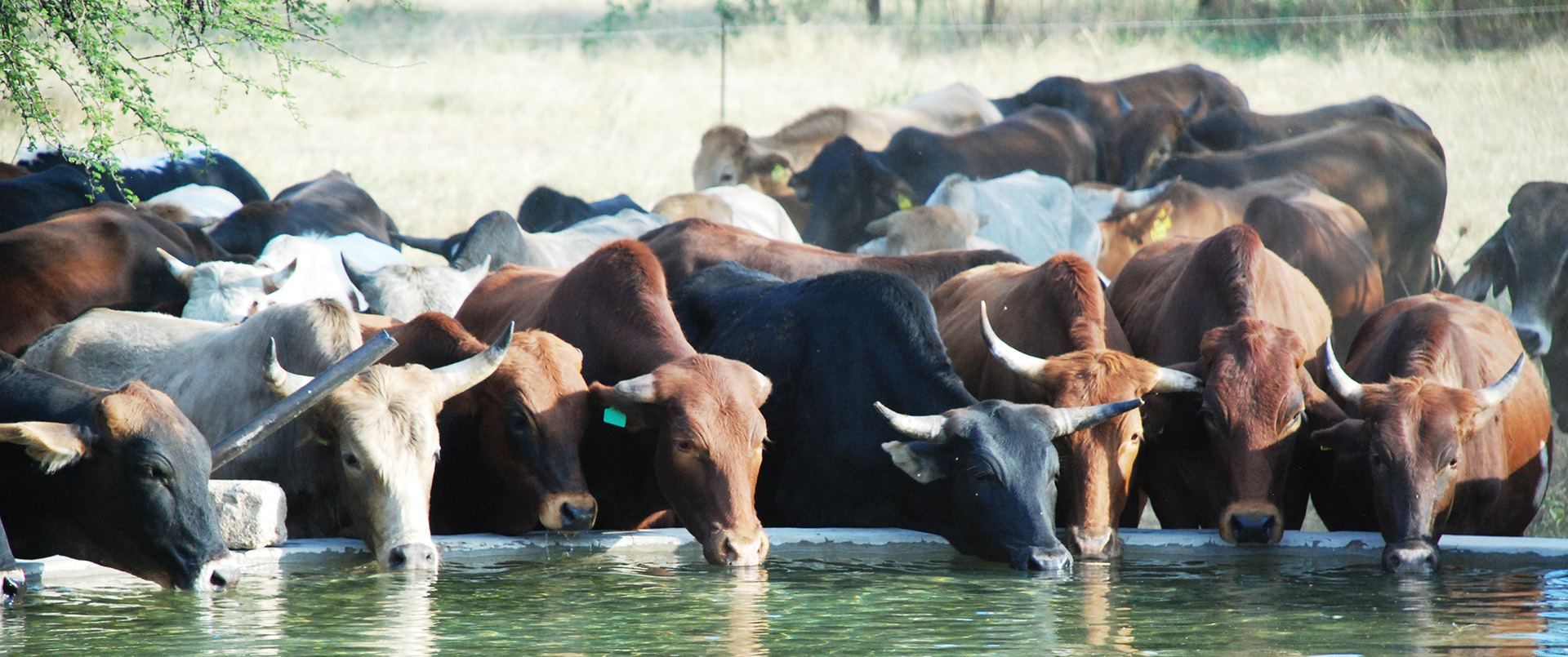
While these techniques are commonplace on a commercial scale globally, a dedicated Zimbabwean program is urgently needed. Over the past 15 years, a lack of structured genetic planning has diluted the quality of indigenous stock. This is a critical missed opportunity, as indigenous breeds are uniquely suited to our local environment and thrive under Zimbabwean climatic conditions.
This reproductive program has massive, highly pertinent applications for both major livestock sectors:
The Dairy Industry: Accelerating milk yields and herd efficiency through superior maternal lines.
The Beef Industry: Improving historically low productivity in communal areas through a precise combination of strategic breeding, genetic adaptation, and correct nutrition.
Empowering the Communal Farmer
A primary goal of this initiative is to actively involve local, small-scale producers. By utilizing communal cows as recipients for these advanced embryos, the resulting progeny will directly revitalize the quality of local herds. This creates a sustainable cycle that increases the market value per animal, directly boosting income for both the rural farmer and the local abattoir.
A Regional Vision for Livestock Excellence
With the technical knowledge, hands-on experience, and determination in place, the ultimate goal is to establish a premier Embryo Transfer station. The long-term ramifications are immense: transforming this project into a recognized regional institution capable of safeguarding and establishing cattle seed stock perfectly adapted to our unique African conditions.
To learn more about the differences between paternal and maternal genetic selection, read our previous feature on How to Accelerate Cattle Genetics: AI, IVF, and the Future of Zimbabwe’s Herds.