
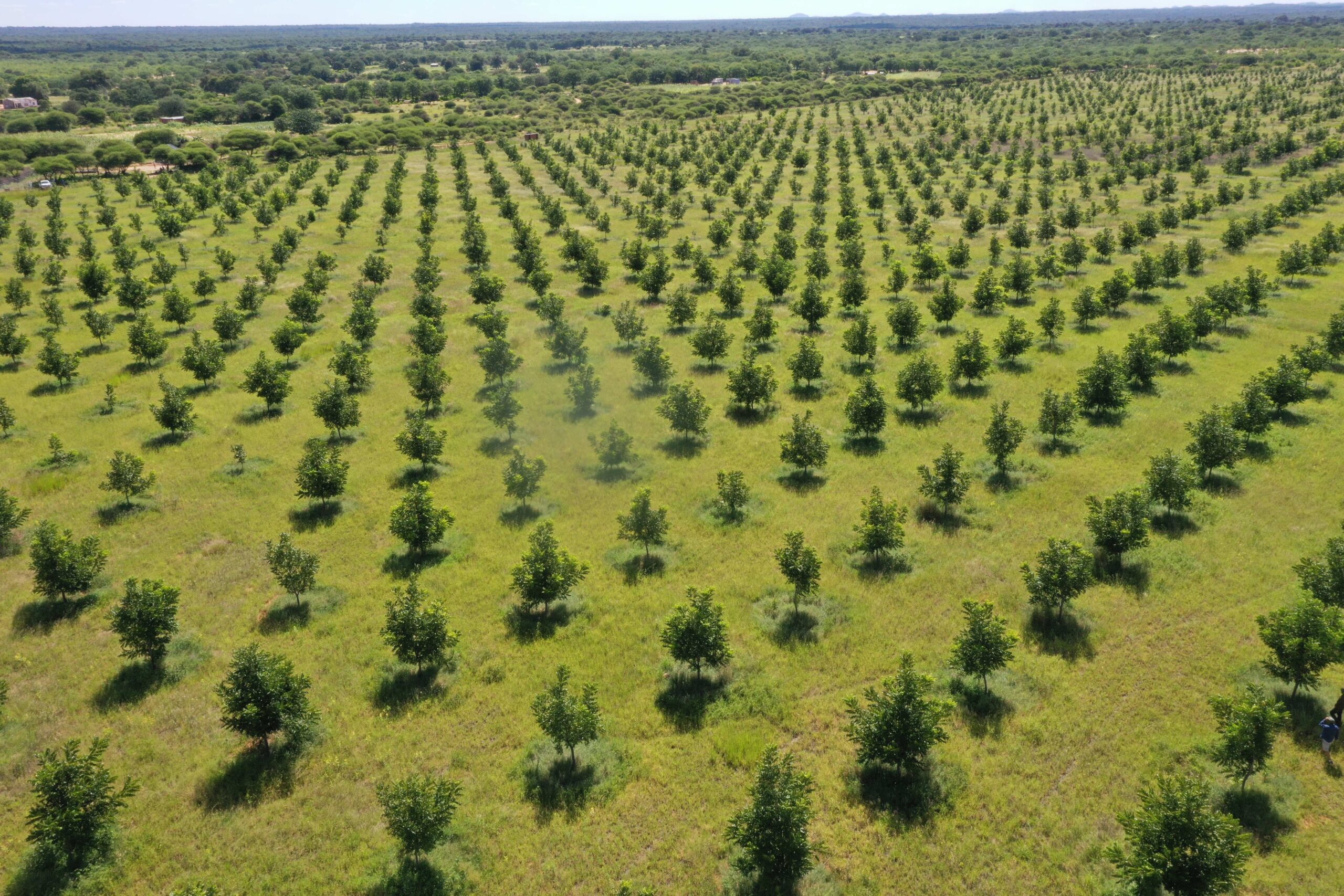
While pecans have been grown in various parts of Zimbabwe for well over 70 years, the commercial industry remains relatively small and undeveloped. The country’s first experimental plantations were established decades ago at Mazowe on the Highveld in the north, and at the Chiredzi Research Centre in the lower south. Early commercial orchards have been producing since the late 1960s, proving the long-term profitability of the crop under local conditions.
Today, the industry is experiencing a massive wave of renewed interest. Driven by improved security of land tenure, rising investor confidence, and the emergence of pecans as a high-value global commodity, new commercial plantings have expanded steadily since the early 2010s. With around 1,000 hectares of plantations now established or undergoing development, Zimbabwe’s annual production—currently estimated at 200 tons—is poised for exponential growth.
Mapping Suitability: Why Matabeleland Leads the Way
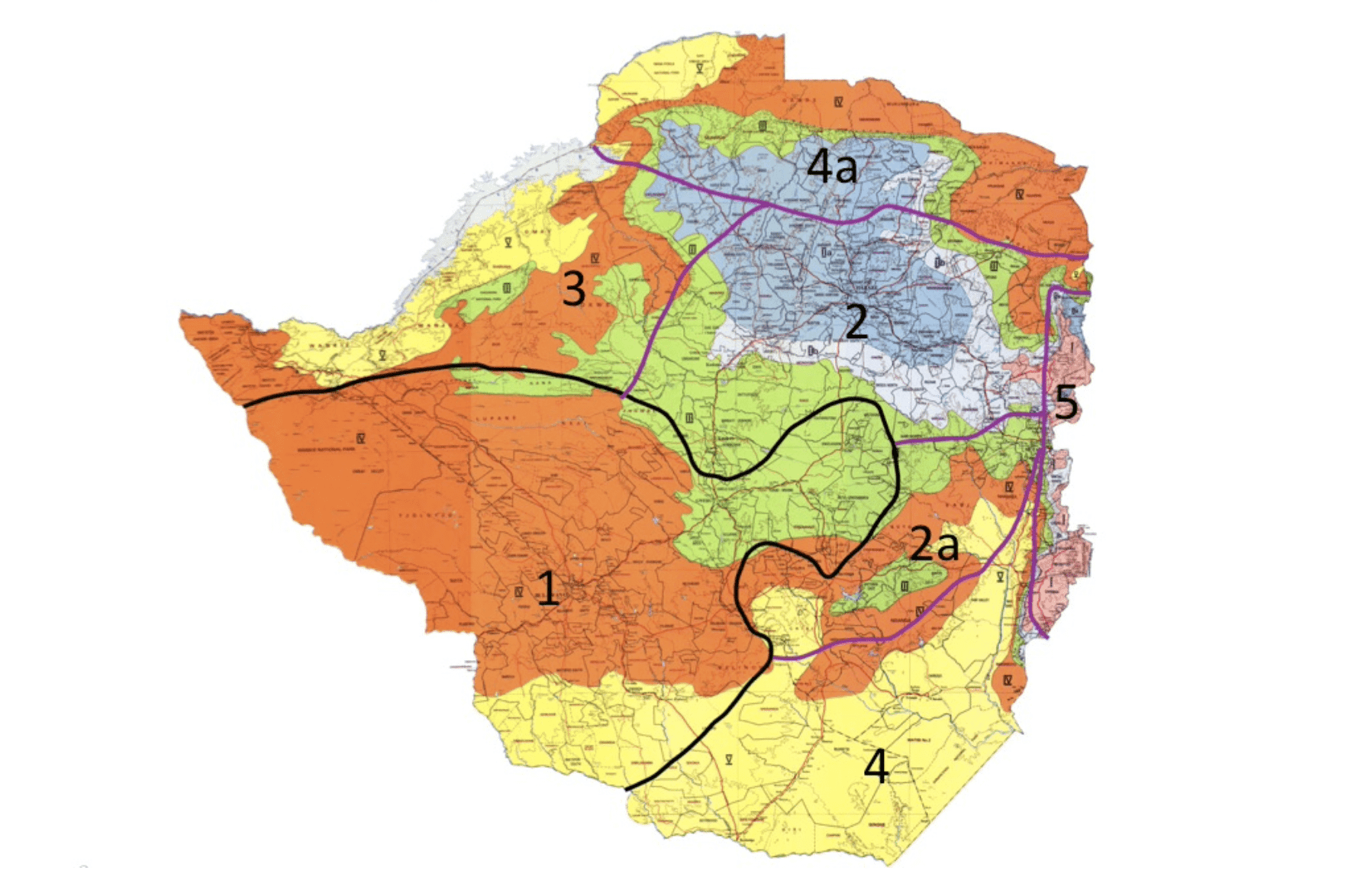
The suitability of different Zimbabwean regions has historically been a point of debate among growers. However, by analyzing relief maps and climate data, distinct areas of preference have been defined for commercial success:
Area 1 (Matabeleland North & South): The Premium Zone Largely situated in Natural Region 4, this zone offers the ideal combination of sandy soils, high winter chill units, and hot summers. Because rainfall averages 450–550mm, production here relies entirely on precise irrigation. This controlled moisture, paired with excellent natural attributes, makes it the single most suitable area in Zimbabwe for premium pecan production.
Area 2 & 2a (Mashonaland & Highveld): Higher Rainfall Risk While winter chill units are satisfactory in Mashonaland, typical rainfalls of 700–850mm bring a significantly higher risk of pecan scab disease. This severely restricts which cultivars can be safely grown here. Moving into warmer pockets, winter temperatures often fail to drop low enough to accumulate vital chill units, limiting local suitability.
Areas 3, 4, & 5: Unsuitable Climates The lowveld and eastern regions prove entirely unsuitable. They are either strictly too warm in the winter for tree dormancy, too dry for rain-fed production, or—in the case of Area 5—the high rainfall and moderate summers make it a mismatch for pecans (though highly suitable for macadamia nuts).
Cultivar Selection and the Nursery Evolution
Pioneer plantings in the 1960s selected a wide array of cultivars from the Nelspruit regions of South Africa, including Pawnee, Ukalinga, Barton, Wichita, Choctaw, and Navajo. As the modern industry matures, Zimbabwean producers are closely following successful regional trends, focusing heavily on a refined mix of Navajo, Western Schley, Choctaw, and Wichita.
While local nursery capabilities are steadily developing within Zimbabwe, the majority of historical plant material has been imported from certified South African nurseries. Though the quality of these trees is excellent, the long-distance cross-border logistics present a major hurdle. Extended transport times subject young trees to severe transplant shock and early mortality. Furthermore, stressed plants are highly susceptible to local subterranean termites—a distinct pest challenge in Zimbabwe that traditional control mechanisms struggle to combat.
Note: This specific logistical risk is exactly why Balu Estate established its own on-site nursery, ensuring our trees transition straight from local soil to our orchards without transport stress.
The Zimbabwe Export Advantage
Despite regional challenges, Zimbabwe possesses an incredible competitive edge in the international arena.
Because our winters are somewhat shorter than in South Africa, bud-break occurs slightly earlier in the season. This directly translates to an earlier crop harvest, allowing Zimbabwean production to beat the bulk of South African volume to the global market. By leading the entry into lucrative Northern Hemisphere markets when global supply is at its lowest, Zimbabwe is uniquely positioned to become the leading edge of the Southern African trading pecan hub.
A Future for Commercial and Small-Scale Growers
The nature of agriculture in Zimbabwe today lends itself perfectly to structured tree management. Over the next decade, the rapid expansion of large-scale commercial projects is expected to pave the way for a thriving, sustainable small-scale out-grower industry.
This dual model is viewed exceptionally favorably by the Zimbabwean Government, which remains highly supportive of long-term plantation crops and has provided targeted concessions to stimulate agri-export growth. Backed by low entry costs and highly competitive costs of production, Zimbabwe has everything it takes to secure a dominant, profitable position on the global agricultural stage.
To see how we apply these regional advantages on our own estate, explore Our Orchards & Cultivars Page.